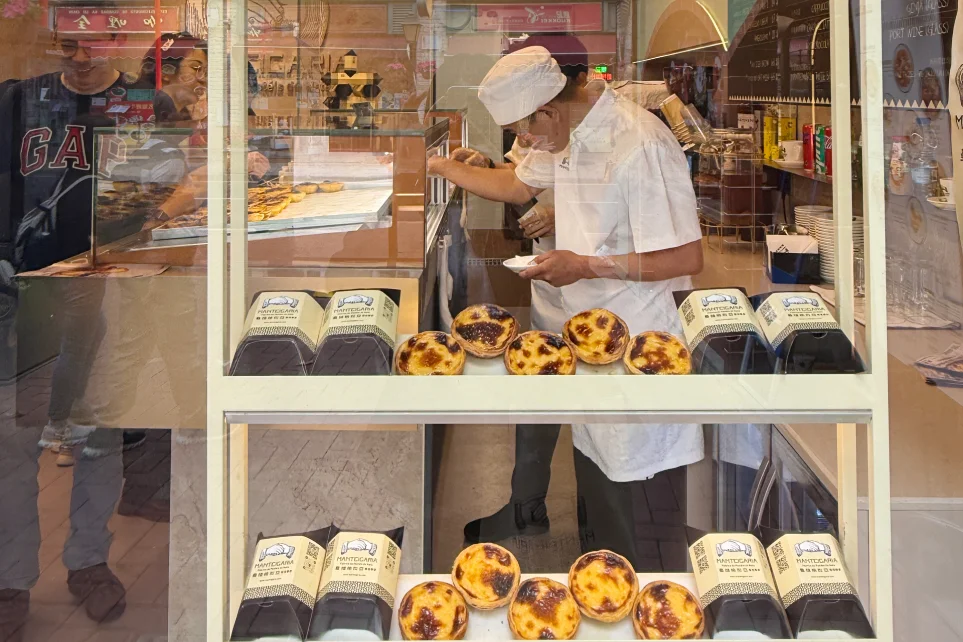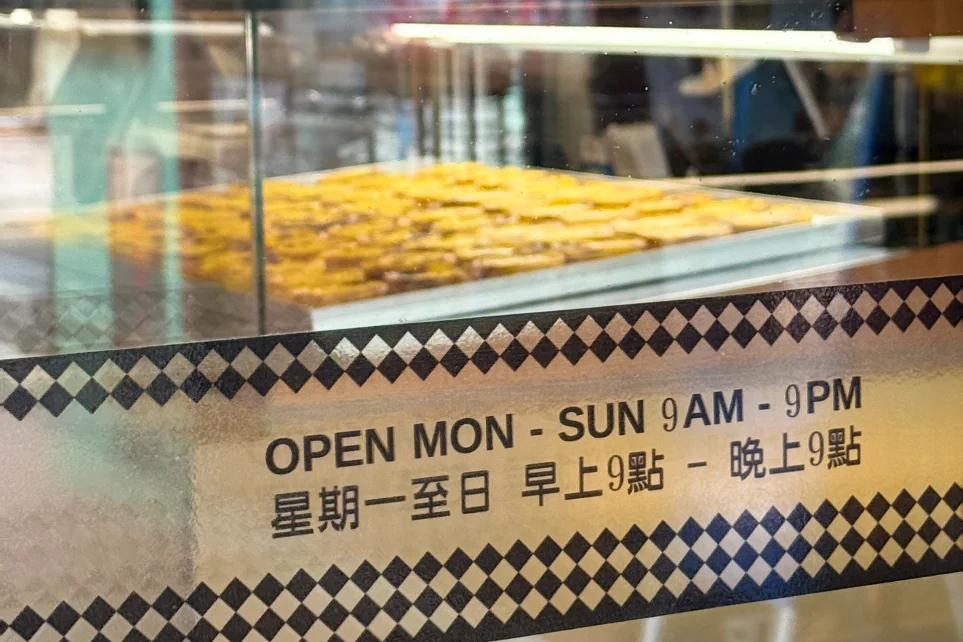
In Taipa Village,
the Manteigaria’s Pastel de Nata is gold on the outside and sweetness on the inside.

In Macau, gold brings prosperity and sweetness brings joy. The Manteigaria’s Pastel de Nata brings both.

Taipa is where the memory of Portugal in China still persists: in the Portuguese sidewalks, in the tiles of the houses, in the leisurely rhythm of the village streets. The island maintains its picturesque side in an identity that is both oriental and European.

On Rua do Regedor, Manteigaria is part of the village’s fabric as if it had always been there. More than a sweet treat, a Pastel de Nata accompanied by a Chá Gordo is a ritual, a pause to contemplate Taipa Village. The sweetest bridge between two distinct cultures.

How to get to Taipa’s Manteigaria

What to do in Taipa while eating our pastel de nata
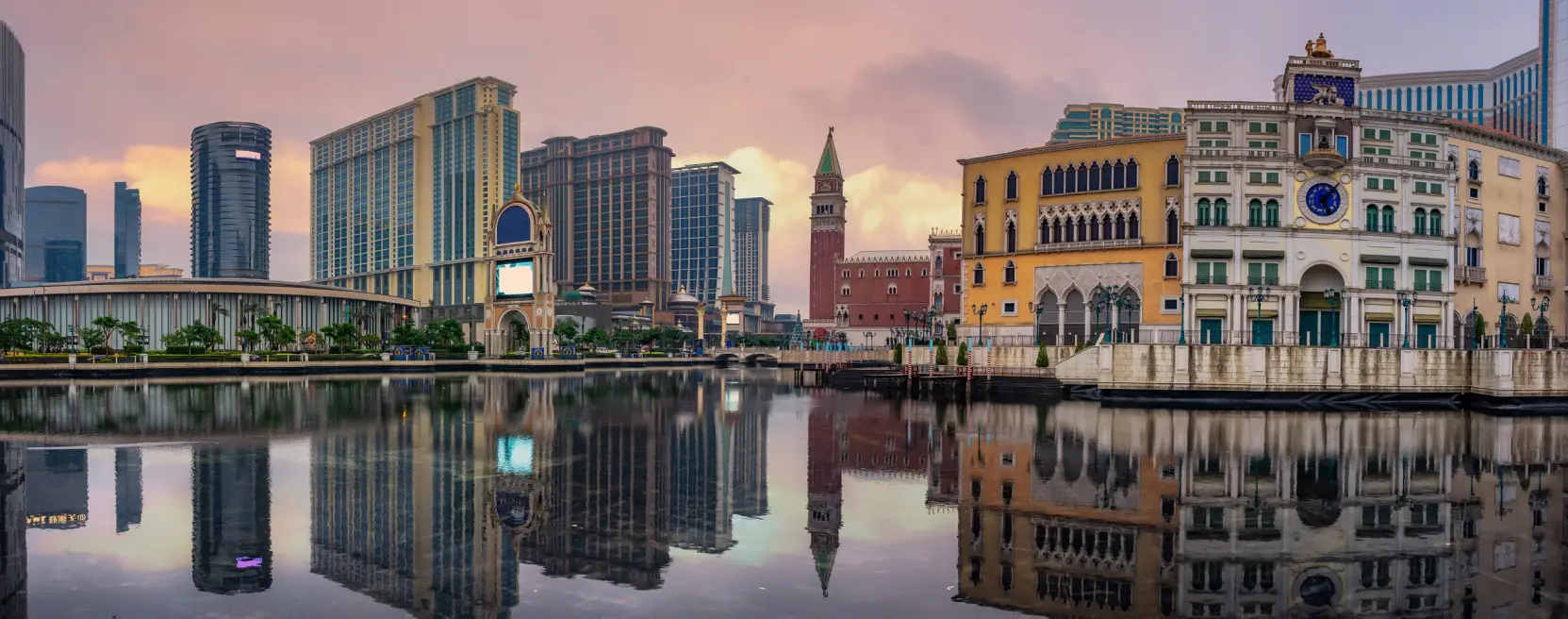
  • The Rua do Cunha is the main artery of Taipa Village, partially pedestrianized and always busy. With shops of all kinds and restaurants serving Macanese and Portuguese cuisine side by side, this is where you can feel the pulse of the Village at any time of day.
  • The Taipa Houses-Museum are five colonial houses from 1921, painted green and white, which served as residences for high-ranking officials of the colonial administration and Macanese families. Today they form a museum complex with a garden, a living memory of daily life during the colonial period, with views over Avenida da Praia. It is one of the eight most important monuments in Macau, which you cannot miss.
  • Built in 1844, the Taoist temple of Pak Tai, dedicated to the Emperor of the North, is one of the most active on the island. The incense, offerings, and golden statues create an atmosphere that contrasts with the Portuguese pavement of the square in front. It is, genuinely, one of the most Macanese settings in the Village.
  • Avenida da Praia unfolds along the southern coast of Taipa, with benches in the shade of trees, lily ponds, and the Houses-Museum in the background. It is the serene counterpoint to the lively rhythm of Rua do Cunha.
  • The Museu de História da Taipa e Coloane is housed in the former Islands Town Hall building, constructed in the early 20th century. It documents the history of the two islands from the arrival of the Hokkien fishermen to the Portuguese administration and the return to Chinese sovereignty in 1999.
  • Largo Maia de Magalhães is one of the most peaceful squares in the Village, surrounded by colorful houses, shops, cafes, and spaces dedicated to the arts with programming linked to the identity and culture of Macau.
  • Pou Tai Un is a Buddhist monastery with a garden and centuries-old trees, just minutes from Taipa Village. One of the most peaceful and unexpected places in Macau.
MANTEIGARIA
macau taipa
Address icon
Address:

Rua do Regedor Nº22,
Vila da Taipa,
Macao

macau taipa
L Ho
I tried their pastéis de nata in Lisbon and they were the best I've ever had. I'm so happy to see a shop in Macau offering an authentic Portuguese flavor.
Arthur Pinheiro
Delicious! Don't be afraid to order two instead of just one. And a coffee! Perfect combination. It truly tasted like home away from home.
Rachael Wong
The staff are very friendly, they showed me the most authentic way to make pastéis de nata and also explained how they adjust the sweetness of the tart to match customer preferences.
Sunny LC Chau
It was thrilling to see this shop again on the other side of the world, back home. It reminded me of the time I lived in Europe.